The Future is Now: 7 AI and Machine Learning Trends Reshaping Tech in 2026
7 min read • Technology Trends
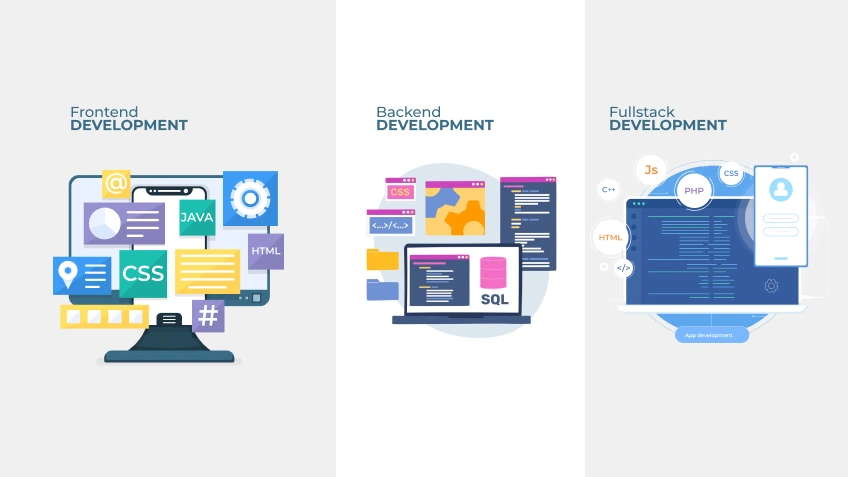
So, you’ve decided to dive into the world of web development—awesome! But the moment you start, you’re hit with a barrage of terms: frontend, backend, full stack. It sounds like tech jargon soup, and you’re left wondering, “Where on earth do I actually begin?”
Don’t worry; every developer has been in your shoes. Choosing a starting point isn’t just about what’s popular; it’s about what fits your brain, your interests, and your goals. This article is your friendly map. We’ll break down the frontend vs backend vs full stack debate into simple, relatable pieces and give you the clarity to take that confident first step.
Imagine walking into a beautifully designed coffee shop. The cozy lighting, the menu board, the comfy chairs you sit in—that’s the frontend. It’s everything the user sees, clicks, and interacts with directly in their browser or app.
Frontend developers are the creative architects of the user experience. They take a website’s design and bring it to life with code, ensuring it’s not only pretty but also functional and responsive on all devices.
A simple example: When you click a “Like” button on social media and it instantly changes color and increments the count—that seamless visual feedback is frontend magic.
Core Technologies You’d Work With:
If you love visual creativity, instant gratification from seeing your work, and crafting how people interact with a product, frontend might be your calling.
(Considering frontend? You might love our deep dive on [How to Build Your First JavaScript Project].)
Now, think about what happens behind the counter at that coffee shop. The roast of the beans, the inventory system, the recipe for your latte, the payment processing—that’s the backend. It’s the server, database, and application logic that the user never sees.
Backend developers build and maintain the technology that powers the frontend. They handle data storage, security, server configuration, and the core business logic.
A simple example: When you log into an app, the frontend sends your username and password to the backend. The backend checks its database to see if your credentials are correct, then sends back a “success” signal, allowing the frontend to let you in.
Core Technologies You’d Work With:
If you love problem-solving, working with data, logic, and building the systems that make things run, backend development could be your perfect fit.
A full stack developer is comfortable working on both the frontend and backend. They understand how the entire “stack” of technologies—from the user interface to the server to the database—fits together.
Think of them as a filmmaker who can both direct the actors (frontend) and manage the cinematography, sound, and editing (backend). They see the big picture.
This doesn’t mean they know every technology in depth, but they have proficiency across both sides and can build a complete, basic application on their own. This role is highly valued for its versatility, especially in startups or smaller teams.

Here’s the straightforward advice most experts and educators give: Start with frontend development.
Here’s why:
Exceptions to the rule:
Frontend Developer:
Backend Developer:
Full Stack Developer:
The great news? All three paths are in high demand.
Future-Proofing Your Skills: No matter where you start, the trend is toward “T-Shaped” skills—deep expertise in one area (the vertical bar of the T) and broad understanding across related areas (the horizontal top). This makes you collaborative and adaptable. Starting with frontend gives you a solid horizontal base, allowing you to later specialize vertically in frontend, backend, or the full stack breadth.
For authoritative information on web standards and technologies, always refer to resources like the MDN Web Docs.
The debate between frontend, backend, and full stack isn’t about finding the “best” one. It’s about finding your best starting point. For the vast majority of students, that starting point is frontend development. It offers the most accessible, visual, and rewarding on-ramp to the incredible world of building for the web.
Remember, your first job title doesn’t define your entire career. Developers shift and grow all the time. The key is to start, build momentum, and let your curiosity guide you from there.
Ready to write your first line of code?
1. Can I become a full stack developer without a computer science degree?
Absolutely. Many successful full stack developers are self-taught or have completed coding bootcamps. What matters is a strong portfolio of projects, practical skills, and a deep understanding of the fundamentals.
2. Is frontend development easier than backend?
“Easier” is subjective. Frontend often has a gentler initial learning curve due to its visual nature, but it comes with its own deep complexities (like state management in large apps). Backend involves different, often more abstract, challenges around logic and data.
3. Which pays more: frontend, backend, or full stack?
Salaries are highly dependent on experience, location, and company. Generally, specialized senior backend or frontend roles can command high salaries, while full stack developers are highly valued for their versatility, especially in mid-level positions and startups.
4. How long does it take to learn frontend development enough to get a job?
With consistent, focused study (around 20 hours per week), you can build a foundational portfolio in 6-12 months. The timeline varies greatly based on prior experience and learning efficiency.
5. Should I learn a frontend framework like React as a beginner?
No. It’s crucial to have a solid grasp of core JavaScript first. Frameworks are tools that make large applications easier to build, but without understanding the underlying language, you’ll struggle to debug or understand what the framework is actually doing.
Call-to-Action (CTA):
Feeling clearer on your path? Pick one small project—maybe a simple webpage about your favorite hobby—and try building it with HTML and CSS this week. Share your result with a friend or online community. The journey of a thousand apps begins with a single line of code. Start building today!
7 min read • Technology Trends
6 min read • UI/UX Design
15 min read • Mobile Development

15 min read • Web Development