Introduction: Why UI/UX Design is Your 2026 Career Power Move
Imagine shaping the way millions of people interact with technology—from the apps on their phones to the interfaces in their smart cars. That’s the reality of a UI/UX designer in 2026. We’re not just talking about making pretty buttons anymore. As digital experiences become the primary gateway for everything from healthcare to finance, the demand for skilled designers who can bridge the human-technology gap is exploding.
If you’re considering a career in this dynamic field, you’re likely wondering: Is UI/UX design still a lucrative career in 2026? The short, resounding answer is yes. But the landscape is evolving. This comprehensive guide will break down the salary you can expect, the factors that influence your paycheck, and the exciting career paths that will define the future. Let’s dive into the data and trends that will shape your journey.
UI/UX Designer Salary Trends in 2026: A Global Snapshot
Salaries for UI/UX designers continue to climb, reflecting their critical role in product success. While 2026 figures are projections, we can extrapolate confidently from current data and growth trends. Remember, these are ranges—your unique skills and location will determine where you land.
Global Salary Averages (Annual, Projected for 2026)
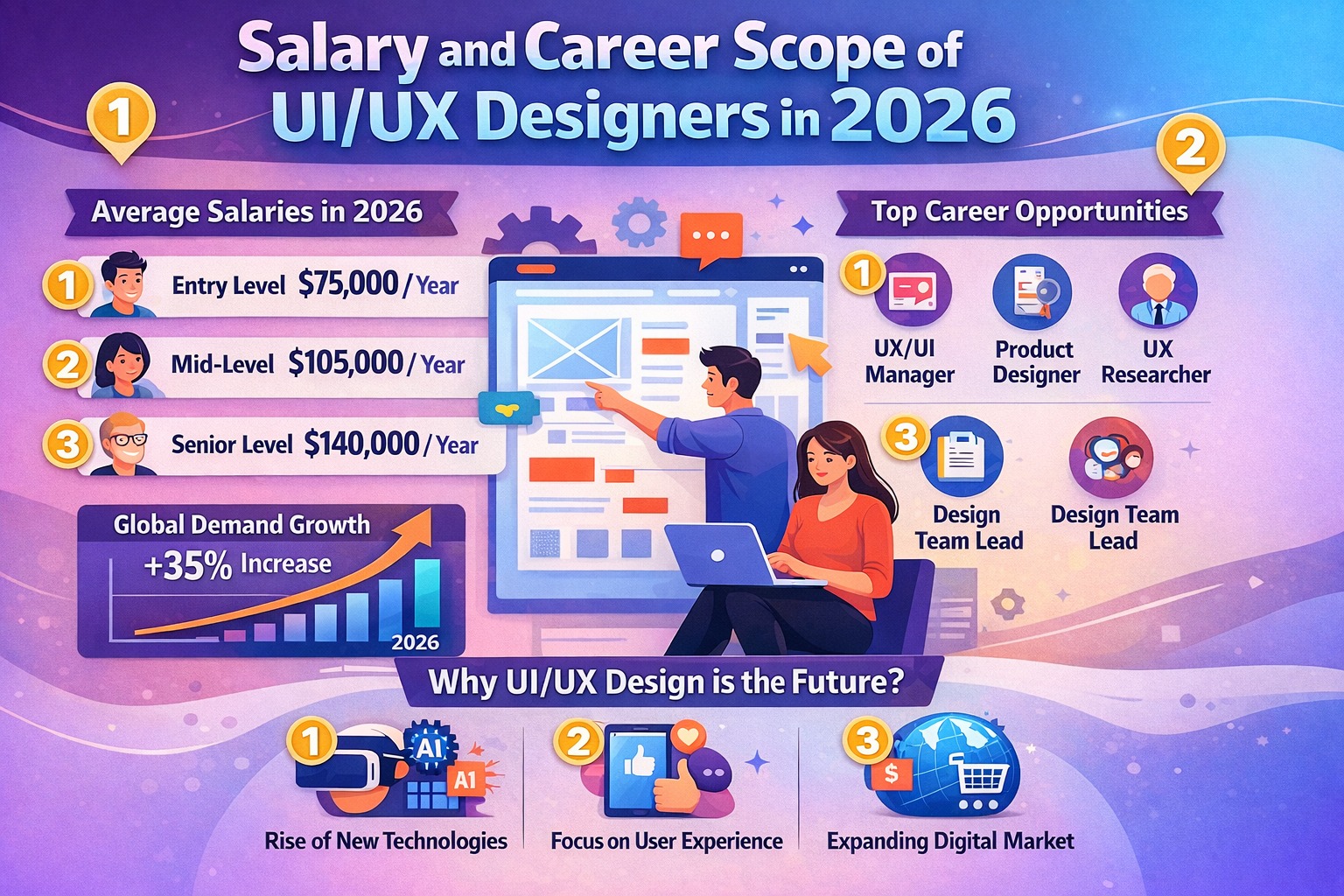
- Junior UI/UX Designer (0-2 years experience): $65,000 - $85,000 USD
- Focus: Executing designs, learning design systems, supporting senior designers.
- Mid-Level UI/UX Designer (3-5 years experience): $95,000 - $130,000 USD
- Focus: Owning features, conducting user research, prototyping complex flows.
- Senior UI/UX Designer (5+ years experience): $135,000 - $180,000+ USD
- Focus: Leading design strategy, mentoring, cross-functional leadership.
Regional Salary Breakdown (Key Markets)
United States & Canada:
- Tech Hubs (SF, NYC, Seattle, Toronto): Salaries lead globally. Seniors can command $160,000-$220,000+, often with significant bonuses and equity.
- Other Major Cities (Austin, Chicago, Vancouver): Strong, competitive salaries often 10-20% below hub levels but with a lower cost of living.
Europe:
- Western/Northern EU (UK, Germany, Netherlands, Sweden): Salaries are robust. Senior roles range from €70,000 to €100,000+. The UK (London) often quotes in GBP (£65,000-£95,000+).
- Southern/Eastern EU: Salaries are lower but growing rapidly with the tech boom, offering excellent opportunity-to-cost-of-living ratios.
Asia-Pacific:
- Major Hubs (Singapore, Sydney, Tokyo): Highly competitive markets. Senior salaries can range from SGD 90,000-140,000 in Singapore or AUD 110,000-160,000 in Australia.
- Growing Markets (India, Indonesia, Vietnam): Experiencing explosive demand. While nominal salaries are lower, growth potential and leadership opportunities are immense.
What Shapes Your UI/UX Salary? The 4 Key Factors
Your paycheck isn’t just about your job title. These four elements dramatically influence your earning potential in 2026.
1. Your Skillset: The T-Shaped Designer Wins
Beyond core Figma/Sketch and user research, specialized skills command premium rates:
- UX Research Mastery: Quantifying design decisions with data.
- Interaction Design & Prototyping (e.g., advanced ProtoPie, Framer).
- UI Design for Emerging Platforms: Designing for AR/VR, voice, or automotive displays.
- Basic Front-End Literacy (HTML/CSS/React): Not required, but it makes you a powerhouse collaborator.
2. Your Location: Remote Work is Reshaping the Map
While tech hubs still pay top dollar, the rise of remote-first companies is creating a new dynamic. You might land a Silicon Valley-level salary while living elsewhere. However, many companies now use regional compensation brackets.
3. Your Industry: Not All Sectors Pay Equally
- Top Paying: Big Tech (FAANG+), FinTech, Blockchain/Web3, Enterprise SaaS, Healthcare Tech.
- High Growth & Impact: EdTech, Climate Tech, Telemedicine, E-commerce.
4. Your Experience & Portfolio: Proof Over Promise
A portfolio showcasing impact—not just aesthetics—is your strongest negotiator. Can you show how your design improved user retention by 15% or reduced support tickets by 30%? That’s the language of high salaries.
The 2026 Career Scope: More Than Just a Job Title
The role of a UI/UX designer is expanding. In 2026, you’re not just a designer; you’re a strategist, advocate, and systems thinker. Here’s where the field is headed:
Emerging Technologies Creating New Niches:
- AI-Integrated Design: Designing the interfaces for—and alongside—AI tools and co-pilots.
- Immersive Experiences (XR): Crafting intuitive 3D and spatial interfaces for AR glasses and VR environments.
- Voice & Conversational UI: Moving beyond screens to seamless voice-first interactions.
- Ethical Design & Digital Wellbeing: A growing specialization focused on user privacy, accessibility, and reducing digital addiction.
Industries Hungry for Your Skills:
Virtually every industry is undergoing a digital transformation. The hottest opportunities will be in:
- Healthcare & Wellness: Patient portals, telemedicine apps, wearable device interfaces.
- Sustainable Tech & Green Energy: Making complex environmental data accessible and actionable.
- Future of Work: Tools for remote collaboration, productivity, and learning.
- Financial Services & DeFi: Simplifying complex financial processes for everyday users.
Career Ladder: Your Potential Growth Path
- Individual Contributor Path: Junior → Mid-Level → Senior → Staff/Principal Designer (shapes design vision for entire product areas).
- Management Path: Senior → Design Lead → Design Manager/Director → Head of Design/VP of UX (leads teams and strategy).
- Specialist Path: Deep dive into UX Research, Content Strategy, or Design Systems as a sought-after expert.
5 Actionable Tips to Maximize Your 2026 Earning Potential
- Build a Problem-Solving Portfolio: Curate 3-5 case studies that walk through your process: the problem, your research, iterations, and the measurable result. This is your #1 asset.
- Specialize Strategically: Don’t be a generalist forever. In 2026, deep knowledge in an area like AI UX or HealthTech design will make you irreplaceable.
- Quantify Your Impact: Learn the basics of business and product metrics. Connect your design work to key performance indicators (KPIs) like conversion rate, engagement, or task success.
- Master ‘Soft’ Power Skills: Your ability to communicate, collaborate, and advocate for users in a room of engineers and product managers is what propels you to senior levels.
- Invest in Continuous Learning: The tools and trends shift fast. Dedicate time to learning—through courses (like those on Interaction Design Foundation), conferences, or peer communities.
Conclusion: Your Design Future is Bright
The question for 2026 isn’t if there will be opportunities for UI/UX designers, but how vast those opportunities will be. As technology becomes more woven into the fabric of our lives, the need for empathetic, skilled designers to humanize that technology has never been greater.
This is more than a career; it’s a chance to shape the future of human experience. The salary reflects that responsibility, and the career path offers endless avenues for growth. Start building your skills, crafting your story, and get ready to design the world of tomorrow.
Ready to future-proof your career? Begin by auditing one app you use daily. What works? What frustrates you? Documenting this critical thinking is your first step toward becoming a designer in demand.