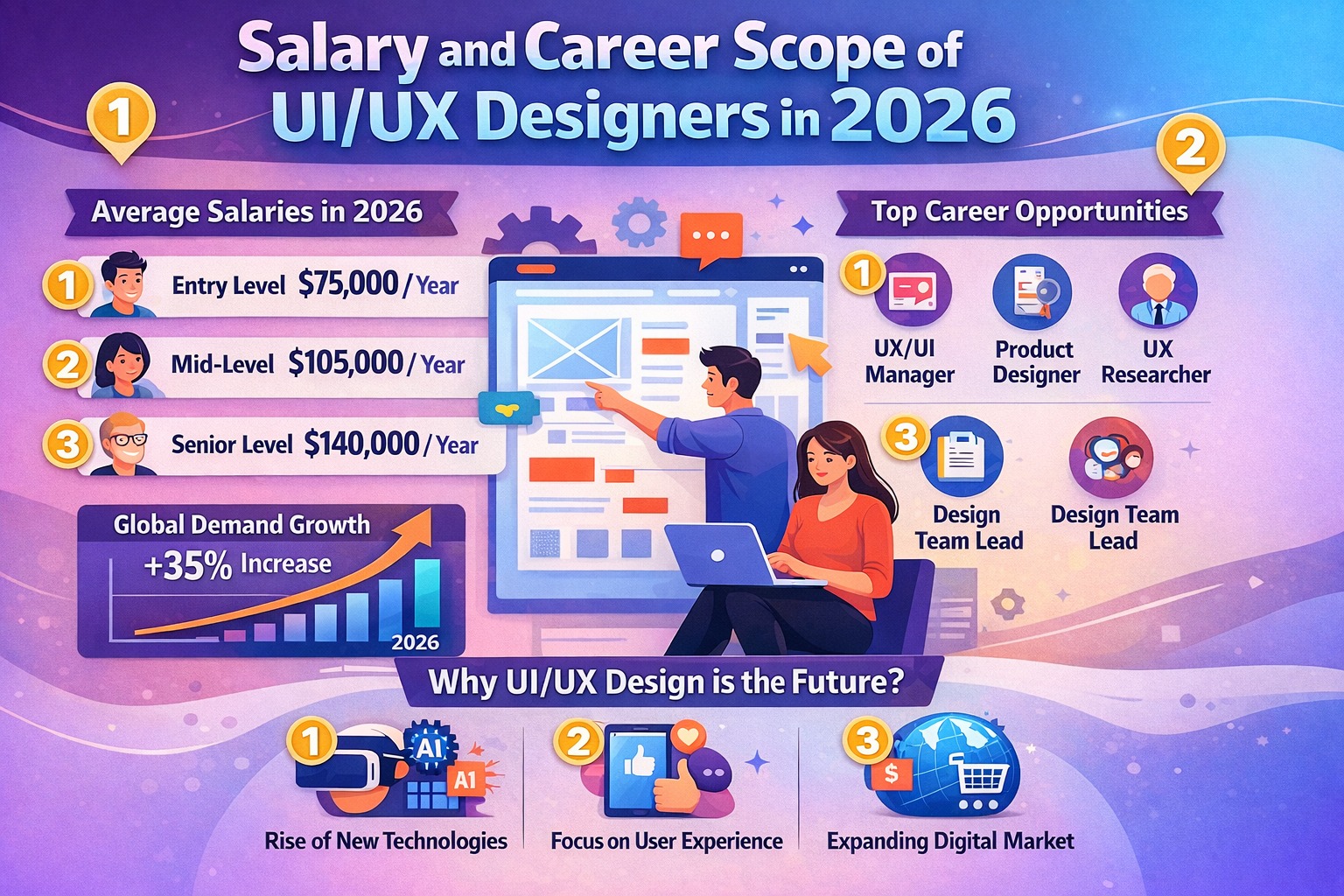
The 2026 UI/UX Designer Salary Guide: What to Earn & How to Grow Your Career
6 min read • UI/UX Design
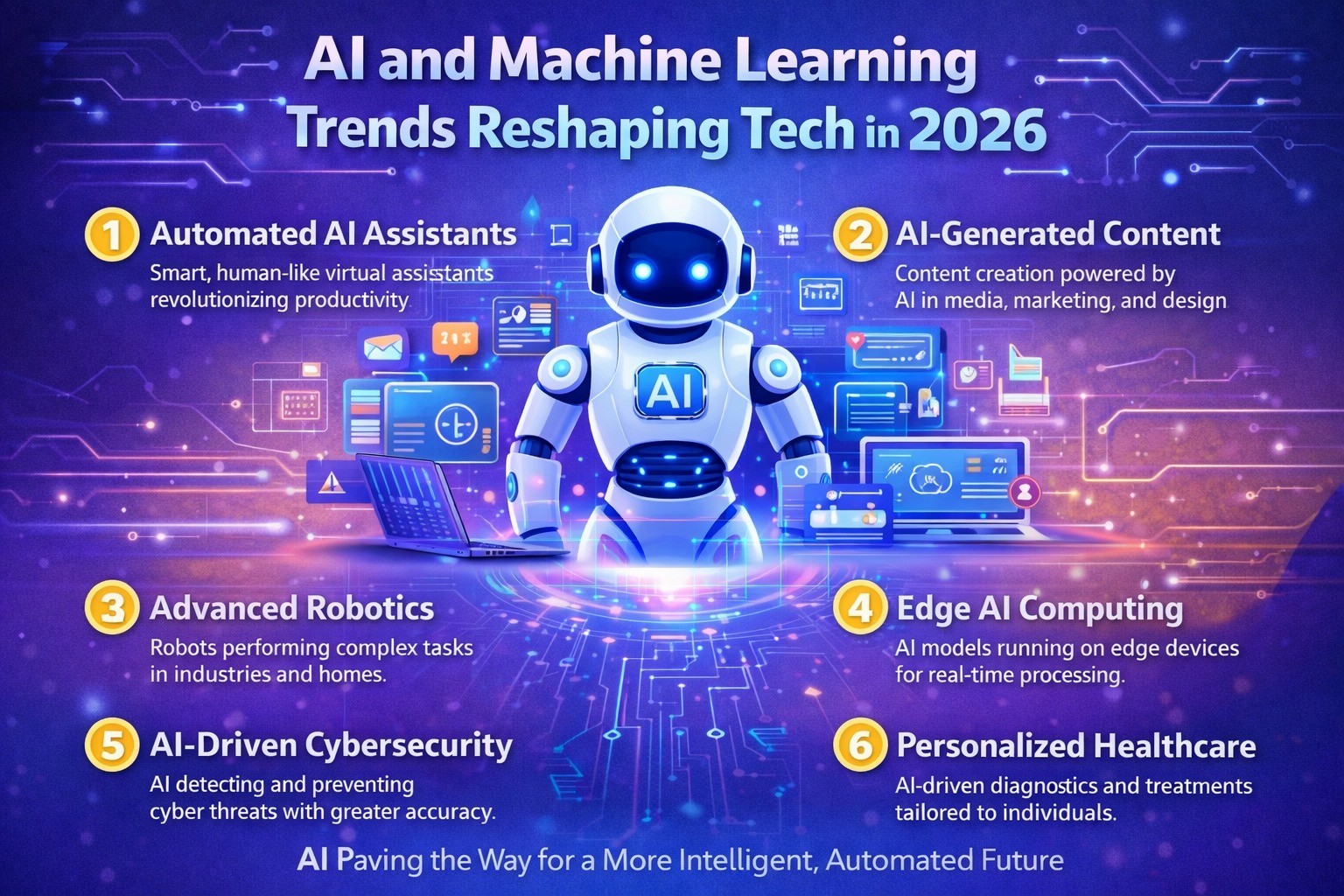
Imagine waking up to a world where your morning coffee is brewed by a machine that learned your perfect temperature, your commute is navigated by an algorithm that predicted traffic patterns before they formed, and your workday begins with an AI assistant that's already prioritized your most critical tasks. This isn't science fiction—this is 2026. Artificial Intelligence and Machine Learning have evolved from buzzwords to the fundamental engines driving the entire tech industry forward. From how we build software to how we heal patients, AI is no longer just a tool; it's becoming the architect of our digital reality. In this article, we'll explore the most transformative AI and Machine Learning trends that are actively reshaping businesses, careers, and our everyday world.
Before we leap into the future, let's ground ourselves in the present. Today, AI has moved far beyond simple chatbots and recommendation engines. We're in the era of practical intelligence—where AI systems are solving complex, real-world problems with tangible business outcomes. According to a recent McKinsey report, over 50% of enterprises have now adopted AI in at least one business function, with customer service, marketing, and product development leading the charge. The global AI market, valued at over $150 billion, is projected to grow at a staggering 38% annually through 2026, fueled by unprecedented investment and innovation.
Remember when AI could only analyze existing data? Welcome to the age of creation. Generative AI—the technology behind systems like GPT-4 and DALL-E—has evolved from novelty to necessity. In 2026, we're seeing:
Real-World Example: Adobe's Firefly integration now allows marketers to generate brand-compliant visual assets in seconds, while pharmaceutical companies use generative models to propose new molecular structures for drug discovery.
As cyber threats grow more sophisticated, so do our defenses. AI is becoming cybersecurity's most powerful ally through:
Statistic Alert: Companies using AI-driven security platforms report detecting breaches 60% faster and reducing incident investigation time by up to 55% (IBM Security Report).
Automation has graduated from simple rule-based tasks to complex cognitive work. The hyper-automation trend combines AI, ML, and robotic process automation to:
Sector Spotlight: In finance, JPMorgan's COIN platform now automates document review tasks that consumed 360,000 human hours annually, with near-perfect accuracy.
Not every AI needs to be a giant. The push for efficiency has sparked two crucial trends:
Practical Impact: This means smarter wearables that monitor health without cloud dependency, and retail stores that analyze customer behavior in real-time without privacy concerns.
The software development lifecycle is undergoing its biggest transformation since agile methodology. AI-augmented development provides:
Career Insight: This doesn't replace developers—it elevates them. Developers who embrace AI collaboration report 3x higher productivity on routine tasks and greater focus on complex architectural challenges.
Predictive analytics has evolved from "what might happen" to "what we should do about it." Advanced ML models now offer:
Transformation Example: Walmart's AI-driven supply chain system now predicts local demand with 95% accuracy up to six weeks in advance, optimizing inventory and reducing waste by 30%.
As AI's power grows, so does scrutiny. 2026 marks the year Responsible AI moves from philosophy to practice through:
AI is revolutionizing diagnostics (pathology AI detecting cancers earlier than human radiologists), personalizing treatment plans, and accelerating drug discovery—reducing development timelines from years to months in some cases.
Beyond fraud detection, AI powers personalized wealth management (robo-advisors managing $1.5 trillion in assets), algorithmic trading, and risk assessment models that incorporate thousands of unconventional data points.
The "Amazon effect" has evolved into fully AI-native shopping experiences—virtual try-ons, dynamic pricing in real-time, and supply chains that auto-adjust to predicted demand spikes.
As mentioned, tools are becoming collaborators. The most profound change isn't in writing code, but in designing systems—AI can now suggest optimal architectures based on millions of successful past projects.
With great power comes great complexity. Organizations face significant hurdles:
As we look toward 2026 and beyond, one truth becomes increasingly clear: the most successful organizations and professionals won't be those replaced by AI, but those who learn to collaborate with it most effectively. The future of AI isn't about artificial general intelligence surpassing humans—it's about specialized intelligence amplifying human capabilities in every field imaginable.
The transformation is already underway. The question is no longer whether AI will change your industry, but how quickly you'll adapt to harness its potential. Whether you're a developer, a business leader, or a curious learner, now is the moment to engage, experiment, and help shape an intelligent future that reflects our best human values.
The most exciting AI applications haven't been invented yet. What problem will you solve with it?
6 min read • UI/UX Design
18 min read • Web Development
15 min read • Mobile Development

15 min read • Web Development